

If you trust the research findings from the social sciences, then here are some results you might find useful–especially if you are planning on doing a job interview. Researchers from Durham University in the U.K. have found that if people want to look trustworthy in Zoom meetings they should stage their rooms to have one of these two items in the background: plants or books.
–

–
Background
The researchers wanted to learn about how our online interactions impact first impressions and the judgments people form from those interactions.
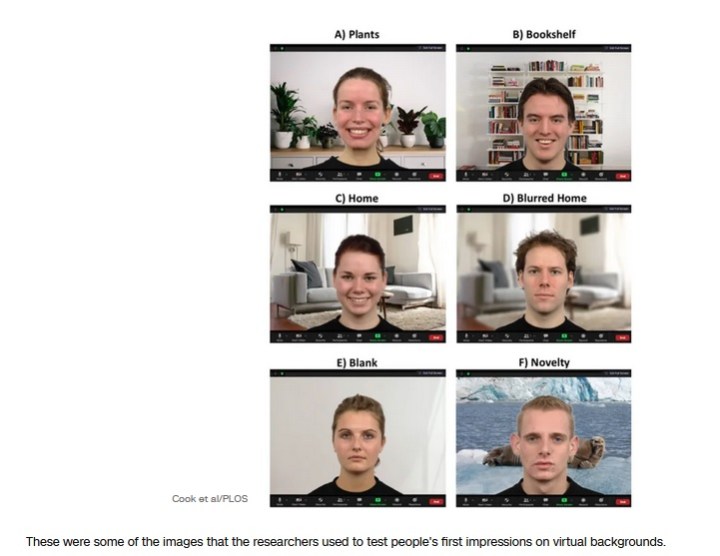
They used 72 photos of 36 adults from a photo database – each one was pictured with both a happy and a neutral expression. These photos were then superimposed on various virtual backgrounds and framed with a Zoom border “to simulate the experience of a video conference call.”
The six backgrounds selected for the study were categorized as: home (living room), blurred home, bookcase, plants, blank wall and novelty (in this case a walrus in front of an iceberg).
Next, they asked 167 participants, aged between 19 and 68, to complete an online questionnaire about how trustworthy and how competent the people in each image appeared to be.
–
–
Findings
The study authors reported: “Faces presented on the plants and bookcase background were consistently rated as the most trustworthy and most competent, contrasting the home and novelty backgrounds which received lower trustworthiness and competence ratings.”
The researchers also found that smiling makes you look more trustworthy and competent, no matter what the background.
–
What’s next
The researchers are creating actual recorded Zoom videos of people at the start of a job interview and planning to change the background and then ask people not just about first impressions, but bigger decisions too–like whether the background affected hiring decisions.
–
SC
Journal Reference: Abi Cook, Meg Thompson & Paddy Ross, Virtual first impressions: Zoom backgrounds affect judgements of trust and competence, PLOS One, September 27, 2023.
https://doi.org/10.1371/journal.pone.0291444
–
 Razor's Edge...Cutting edge media for independent thinkers.